
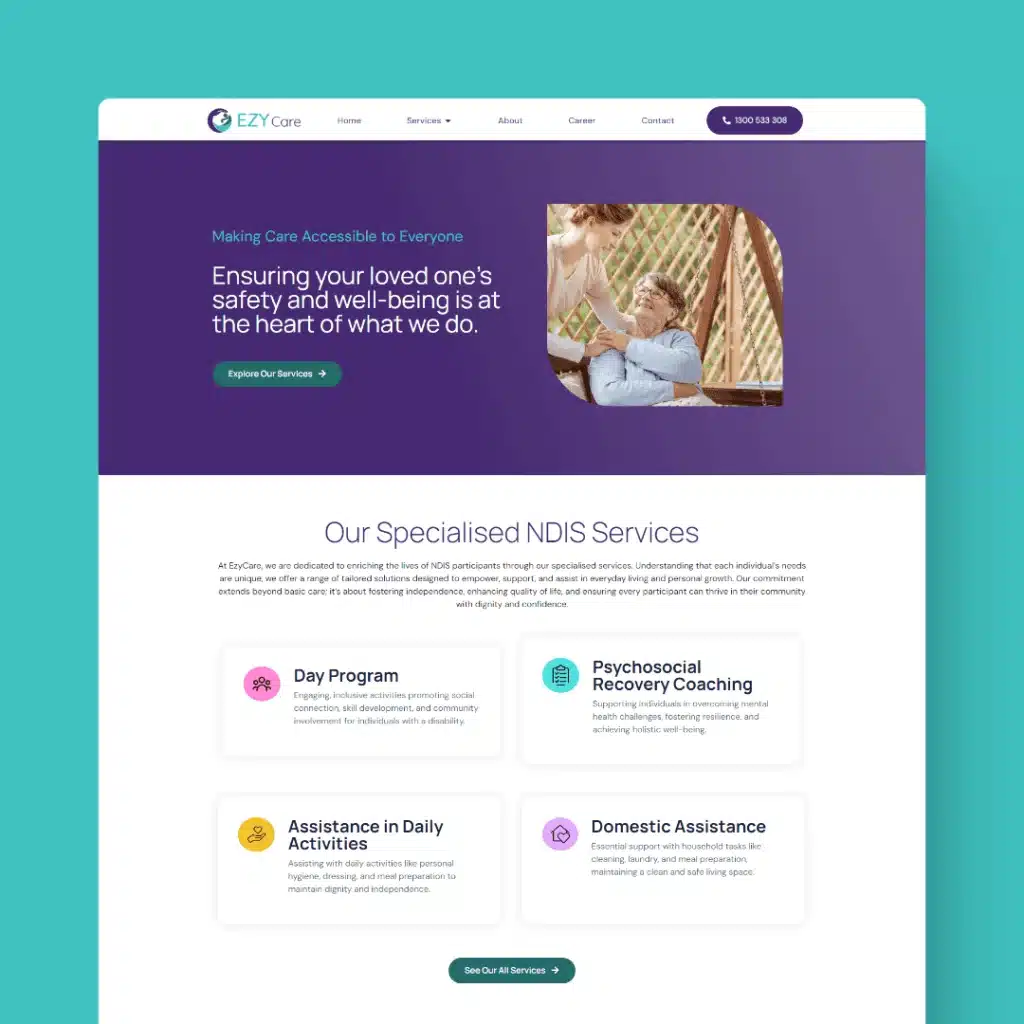
Disability Support Services Website Design
For disability support services, a website is far more than a marketing tool; it is a point of access for people who…
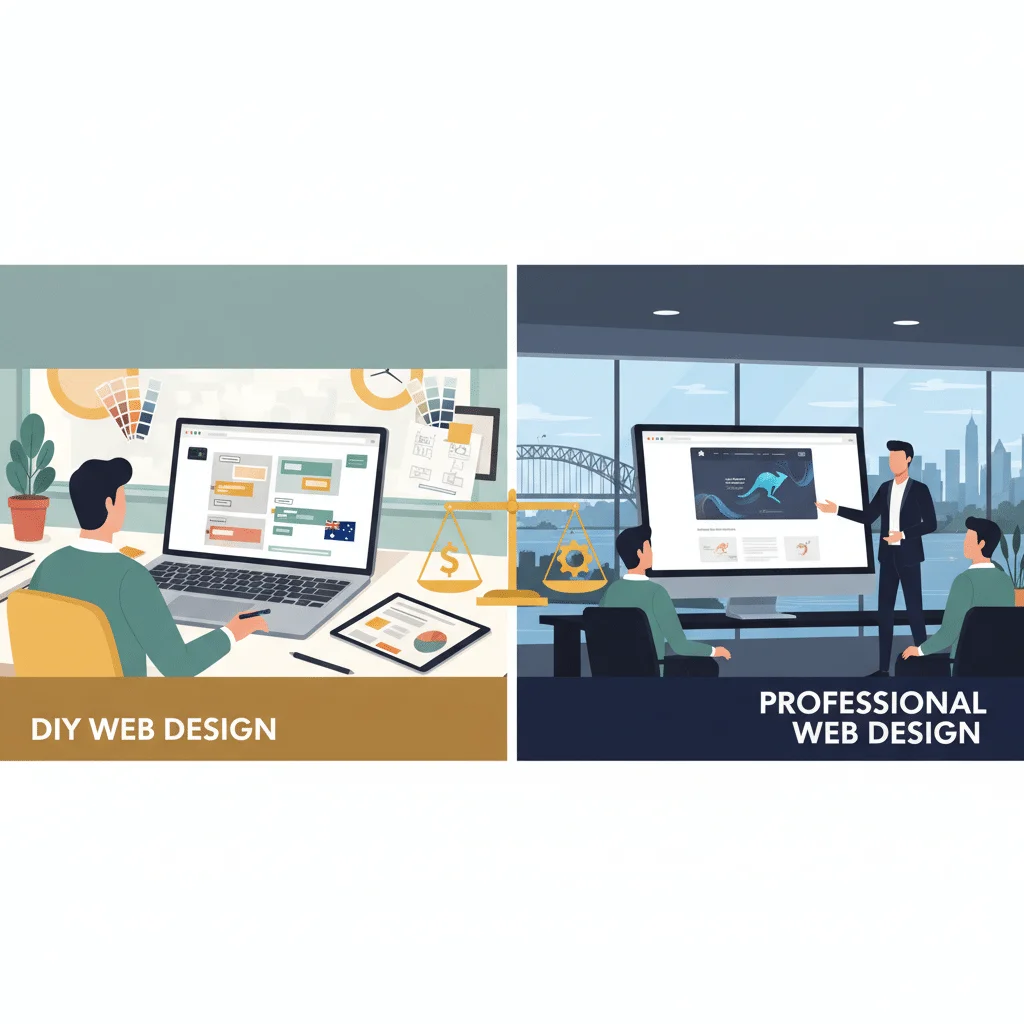
Is DIY web design worth it? For Australian small businesses weighing the cost of a website builder against hiring a professional, the honest answer is: it depends on the return you need. This guide focuses on the value side of the decision, what you really get, what it really costs, and when DIY pays off versus when it quietly holds your business back. At MindSite Web Services, we would rather give you a clear-eyed view than a sales pitch.
DIY website builders are genuinely useful. For a low monthly fee you can have something live in a weekend, with full control and no waiting on anyone. For a brand-new venture testing an idea, a market stall with a simple online presence, or a hobby turning into a side income, DIY can be exactly the right, sensible choice.
The sticker price is only part of the story. To judge whether DIY is worth it, add up:
When these are included, a “cheap” DIY site often is not as cheap as it first appears. We compare the two approaches in detail in DIY vs professional web design.
A website is not just a cost, for most businesses it is a sales and credibility tool. The question is how much revenue depends on it. If your site is expected to generate enquiries, bookings or sales, small improvements in design, speed, SEO and trust can return many times their cost. In that case, professional design is usually the better investment. If your site is a low-stakes placeholder, the return is small either way, and DIY makes sense.
In these situations, a professional web design typically pays for itself.
Estimate what one new customer is worth to you, then ask how many extra enquiries a better website would need to generate to cover the cost of professional design. For most businesses that depend on their site, the answer is surprisingly few, which is what tips the value equation toward hiring a professional.
A DIY site can serve a new business well, but most growing businesses reach a point where it starts holding them back. The clearest sign is when your website becomes a meaningful source of leads or sales. Once revenue depends on it, small weaknesses in design, speed, trust or search visibility translate directly into lost income, and the case for professional design becomes compelling. Another sign is spending more and more of your own time wrestling with the builder, fixing layout problems or adding apps to fill gaps, when that time would be far better spent running the business.
You may also have outgrown DIY if your site looks noticeably less polished than your competitors, if it is slow or awkward on a phone, or if you simply cannot get it to do what you now need. Difficulty ranking in Google despite your best efforts is another common trigger, because DIY platforms often make serious SEO hard. None of this means DIY was the wrong choice to begin with. For many businesses it is exactly the right way to start. The key is to recognise the moment when the savings no longer outweigh the costs, and to invest in a professional site before a weak one starts costing you the customers and credibility you have worked to build. If two or three of these signs feel familiar, it is probably time to talk to a professional.
When a DIY website has taken your business as far as it can, moving to a professionally built site is less about appearances and more about results. The most immediate gain is usually credibility. A polished, well-structured site signals to customers that you are established and trustworthy, which matters enormously when someone is deciding whether to spend money with you rather than a competitor. First impressions form in seconds, and a professional site makes those seconds count in your favour.
The deeper gains show up over time. A professionally built site is designed to be found, with the on-page SEO and technical foundations that help you appear when customers search, rather than being buried where no one sees you. It is built to convert, guiding visitors smoothly toward enquiring or buying instead of leaving them to figure things out for themselves. It loads quickly, works flawlessly on a phone, and is structured so it can grow as you add services or reach new markets. Just as importantly, you get to hand over the technical burden, the updates, security and fixes that quietly eat into your time, so you can focus on running the business. None of this means a DIY site was a mistake, it often makes perfect sense in the early days. But once your business depends on the website to bring in real work, a professional build stops being an expense and starts being one of the most reliable investments you can make in your growth.
Often, yes, especially for validating an idea. Just plan for a professional rebuild once the business depends on the site.
Check your site speed, mobile experience and search visibility. If it is slow, hard to use on a phone, or absent from Google, you are likely losing enquiries.
Start lean, measure results, and invest in professional design once the numbers justify it. We are happy to advise on the right moment.
Not sure whether DIY is worth it for your business? Contact MindSite Web Services or call 02 9161 1696. We will help you weigh the costs and returns honestly, even if DIY is the right answer for now.
Keep reading
Other pieces on the same sort of problem, written out of the work we do for Australian businesses.
Send us your website and we will come back with the specific things we would change and why, in plain English. No pitch deck, no obligation, and you keep the notes either way.
Rated 5.0 from 100+ Google reviews. No lock in contracts, ever.