
Empowering Non-Profits and Charities with Exceptional Website Design
For non-profits and charities, a website is far more than an online brochure. It is where you communicate your mission, inspire support,…
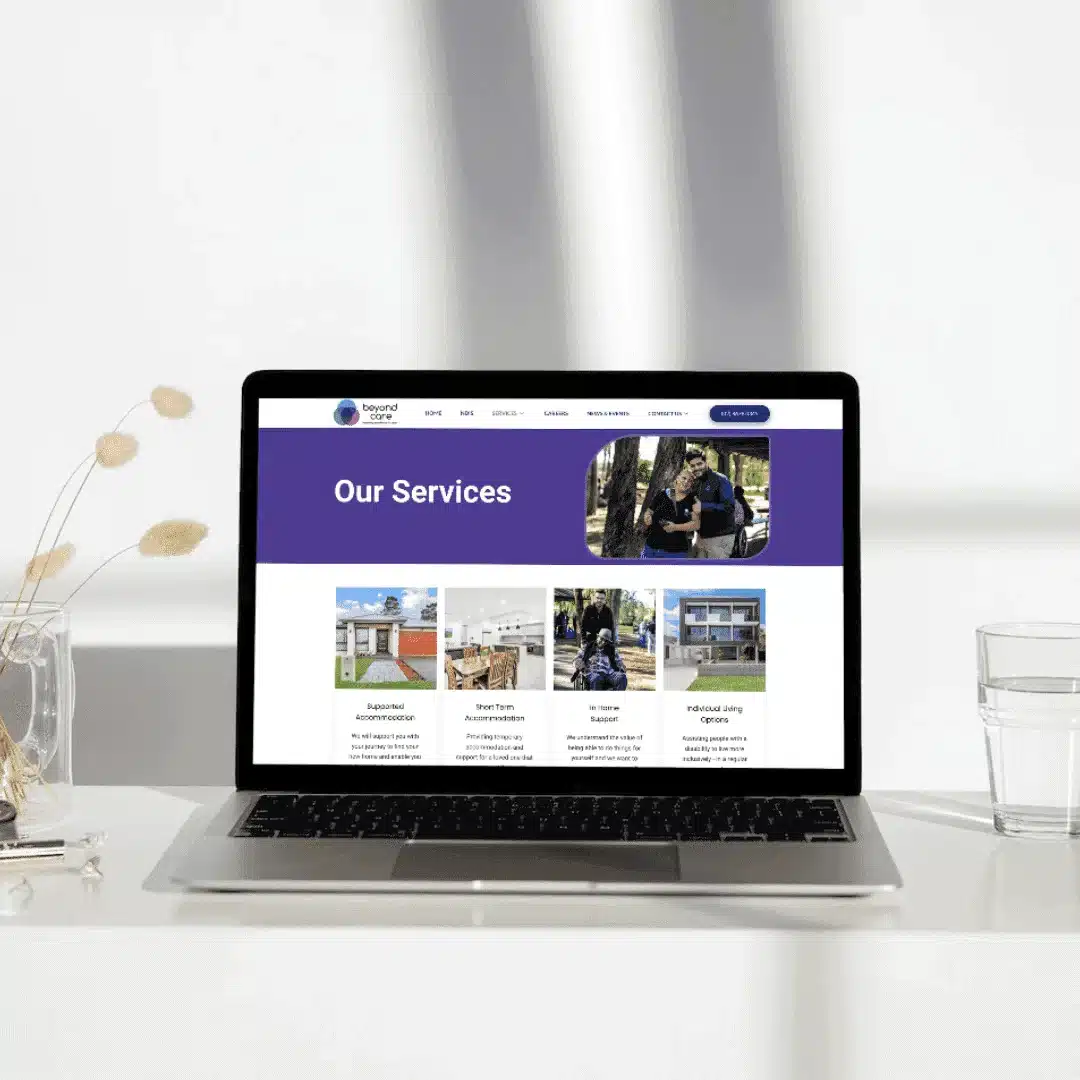
For NDIS websites, accessibility is not a nice-to-have feature to add if there is budget left over; it is fundamental. Many of the people visiting an NDIS website live with disability and rely on accessible design to use it at all. A site that excludes them contradicts the very purpose of the service. Here is why every NDIS website needs accessibility built in, what that means in practice, and the benefits it brings beyond simply doing the right thing.
An NDIS provider exists to support people with disability, so a website those very people cannot use is a fundamental contradiction. Accessibility ensures that participants, regardless of their disability, can find information, understand your services and make contact independently and with dignity. Treating accessibility as essential, rather than an optional extra, reflects genuine commitment to the people you serve. For an NDIS website, building accessibility in is not just good practice; it is central to the service’s purpose.
Accessibility serves a wide range of people. Those with vision impairment may use screen readers or need strong contrast and resizable text. People with motor disabilities may navigate by keyboard rather than a mouse. Others may have cognitive disabilities that make clear, simple content essential, or hearing impairments requiring captions. Understanding who relies on accessibility makes clear why it matters so much for an NDIS website, where these are precisely the visitors you most want to reach and serve.
The recognised standard for web accessibility is the Web Content Accessibility Guidelines, commonly referenced at the AA level. In practice, meeting it involves a set of concrete measures, each removing a real barrier for a real person. Rather than an abstract ideal, accessibility is a series of practical design choices that together make your website usable by everyone. Understanding these requirements helps you build or assess an NDIS website that genuinely includes all visitors.
Strong colour contrast between text and background ensures people with low vision can read your content, while text that can be resized without breaking the layout helps those who need larger type. These basics make a significant difference to readability for many visitors. For an NDIS website, ensuring text is clearly legible and adjustable is a simple but vital step toward accessibility, removing one of the most common barriers people with vision impairment encounter.
Many people cannot use a mouse and navigate websites entirely by keyboard. An accessible NDIS website allows full navigation by keyboard, in a logical order, with a visible indicator showing where the user is. If important functions can only be reached with a mouse, these visitors are excluded. Ensuring complete, sensible keyboard navigation is essential for accessibility, allowing people with motor disabilities to use your site fully and independently.
People who are blind or have low vision often use screen readers, which rely on descriptive alternative text to convey images and properly structured content to make sense of a page. Providing meaningful alt text and a logical structure ensures screen reader users can access your information. For an NDIS website, supporting screen readers is crucial, because it allows participants with vision impairment to understand your services and engage with your service on equal terms.
Plain language is a key accessibility feature, supporting people with cognitive disability, those for whom English is a second language, and anyone navigating a complex system under stress. Explaining your services simply, avoiding jargon, and writing clearly makes your website usable and welcoming for far more people. For an NDIS website, clear, respectful, plain language is both an accessibility measure and a way to communicate with the warmth and clarity participants and families deserve.
Forms are often where accessibility breaks down, yet they are how people enquire and refer. Accessible forms have clear labels, helpful instructions, and error messages that explain plainly what to fix, all usable by keyboard and screen reader. Ensuring your enquiry and referral forms are accessible means participants and coordinators can actually reach you. For an NDIS website, accessible contact options are essential, because the whole point is to connect people with the supports they need.
Accessibility is the right thing to do, but it also brings practical benefits. An accessible website reaches more people, demonstrates your values, and often improves usability and search performance for everyone. Many accessibility practices, like clear structure and plain language, simply make a better website. So while accessibility is fundamental for ethical reasons, it also widens your reach and strengthens your site, making it a genuine investment rather than merely an obligation to meet.
Accessibility is far easier and more effective when built in from the beginning rather than bolted on later. Designing with accessibility in mind from the outset ensures it is woven through every part of the site, rather than patched in as an afterthought. For NDIS providers building or improving a website, prioritising accessibility from the start produces a genuinely inclusive result and avoids the cost and compromise of trying to retrofit it onto a site that ignored it.
Common mistakes include poor colour contrast, images without alt text, forms that cannot be used by keyboard or screen reader, jargon-heavy content, and treating accessibility as an afterthought. Each excludes people the service is meant to help. Avoiding these pitfalls, by meeting recognised standards and building accessibility in from the start, ensures an NDIS website genuinely serves everyone. For an NDIS provider, getting accessibility right is both an ethical priority and a mark of a service that truly includes the people it supports.
Keep reading
Other pieces on the same sort of problem, written out of the work we do for Australian businesses.
Send us your website and we will come back with the specific things we would change and why, in plain English. No pitch deck, no obligation, and you keep the notes either way.
Rated 5.0 from 100+ Google reviews. No lock in contracts, ever.