

Social Media Marketing, Why Your Business Needs It
Social media marketing can feel like a full-time job, and many small business owners either avoid it or burn out trying to…
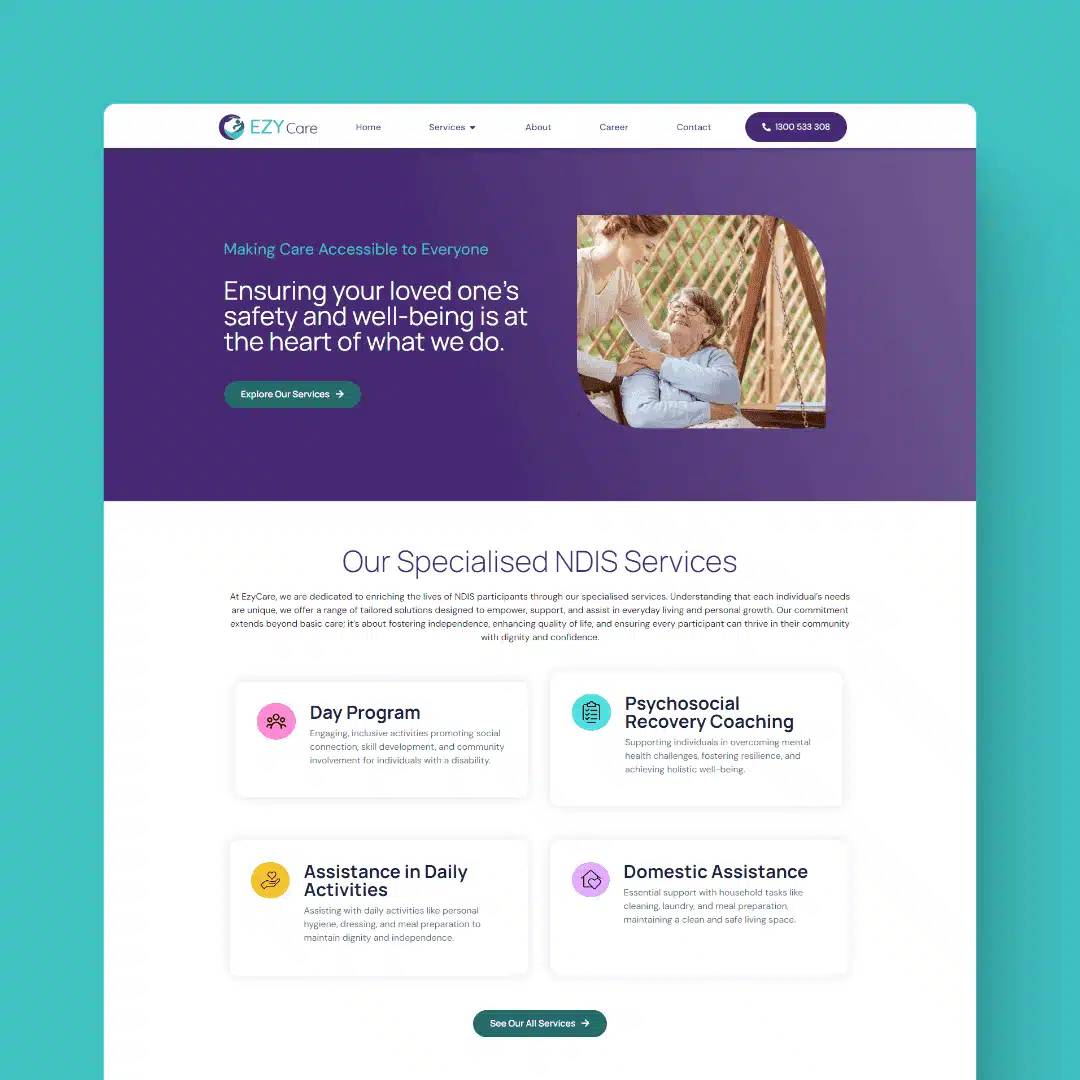
For disability support services, a website is far more than a marketing tool; it is a point of access for people who may rely on assistive technology to use it at all. Participants, families and coordinators come to your site to understand your supports and decide whether to trust you, and accessibility, clarity and warmth are essential. Here is what matters most in website design for disability support services, with inclusion at the heart of every decision.
A website for a disability support service carries responsibilities that an ordinary business site does not. Many visitors live with disability and may use screen readers, keyboard navigation or other assistive technology, so the site must genuinely work for them. Beyond function, the tone must be respectful and reassuring for people who may be navigating a complex system. These websites are judged not just on appearance but on whether they include and serve the very people the service exists to support.
Accessibility is the foundation of a disability support website, not an optional extra. If your site excludes people with disability, you are turning away those you most want to help and contradicting your own purpose. Building accessibility in from the start, rather than retrofitting it, ensures everyone can find, understand and act on your information with dignity. For a disability support service, accessibility is both an ethical obligation and a practical necessity that shapes every design choice.
The accepted benchmark for accessibility is the Web Content Accessibility Guidelines, commonly referenced at the AA level. In practice this means strong colour contrast, resizable text, full keyboard navigation, descriptive alternative text on images, clear form labels and captions on video. Each requirement removes a real barrier for a real person. Meeting these standards ensures your website is genuinely usable by people with a range of disabilities, demonstrating that inclusion is built into how you operate.
Plain, respectful language is essential on a disability support website. Visitors may be navigating supports while managing stress or complexity, and clear writing helps enormously. Avoid jargon and acronyms, explain your services simply, and use a warm, person-centred tone. Clear language is itself an accessibility feature, supporting people with cognitive disability or those for whom English is a second language. The goal is for anyone to quickly understand what you offer and whether you can help.
Visitors need to quickly understand the supports you provide and whether they are a fit. Lay out your services clearly, describe who you help, and be transparent about how to get started. When people can immediately see that you offer what they need, they are far more likely to make contact, and you receive better-matched enquiries. Clarity about your services and eligibility reduces hesitation and helps connect the right people with the right supports.
Choosing a disability support provider is a significant, trust-based decision. Genuine information about your team, values and approach reassures families that caring, capable people stand behind the service. Authentic testimonials, shared with consent, reinforce that confidence. Demonstrating real care and understanding through your website helps prospective participants and families feel safe choosing you. In a sector built on trust and dignity, a website that conveys genuine care is far more persuasive than one focused only on services.
Your website should remove every obstacle between an interested visitor and getting in touch. A visible phone number, short and clear enquiry and referral forms, and an obvious next step from any page all help. Support coordinators in particular need to refer quickly and confidently. The easier you make it to contact or refer to you, the more enquiries you convert into engagements, so effortless contact is one of the highest-value elements of the design.
Disability support involves deeply personal information, so privacy and dignity must guide your website. Use secure forms, be clear about how you handle personal information, and treat any stories or images with care and explicit consent. A visible commitment to privacy and respect reassures visitors that their sensitive details and experiences are safe with you. Handling personal information responsibly is both an ethical duty and a powerful trust signal in a sector built on safeguarding.
Many participants and families will visit your website on a phone, sometimes using assistive features. A mobile-friendly, fast-loading site ensures everyone can read your information and reach out easily, regardless of device or connection. A slow or awkward mobile experience creates barriers for the people you serve. Ensuring strong mobile performance is part of accessibility and inclusion, making it as easy as possible for everyone to engage with your service.
A disability support website must stay accurate and current, with up-to-date services, team information, contact details and accessibility. Outdated information frustrates visitors and undermines trust, and accessibility standards and expectations evolve over time. Regularly reviewing and maintaining your site protects both your participants and your reputation. Treating your website as a living part of your service, rather than a one-off build, keeps it genuinely useful and inclusive over the long term.
Common mistakes include neglecting accessibility, using jargon-heavy or unclear language, making contact difficult, overlooking privacy, and letting content go out of date. Each can exclude or deter the very people the service is meant to help. Avoiding these pitfalls, by building an accessible, clear, trustworthy and current website that makes contact easy and safeguards dignity, ensures your site genuinely serves participants, families and coordinators, and reflects the inclusive values at the heart of disability support.
Keep reading
Other pieces on the same sort of problem, written out of the work we do for Australian businesses.


Send us your website and we will come back with the specific things we would change and why, in plain English. No pitch deck, no obligation, and you keep the notes either way.
Rated 5.0 from 100+ Google reviews. No lock in contracts, ever.