
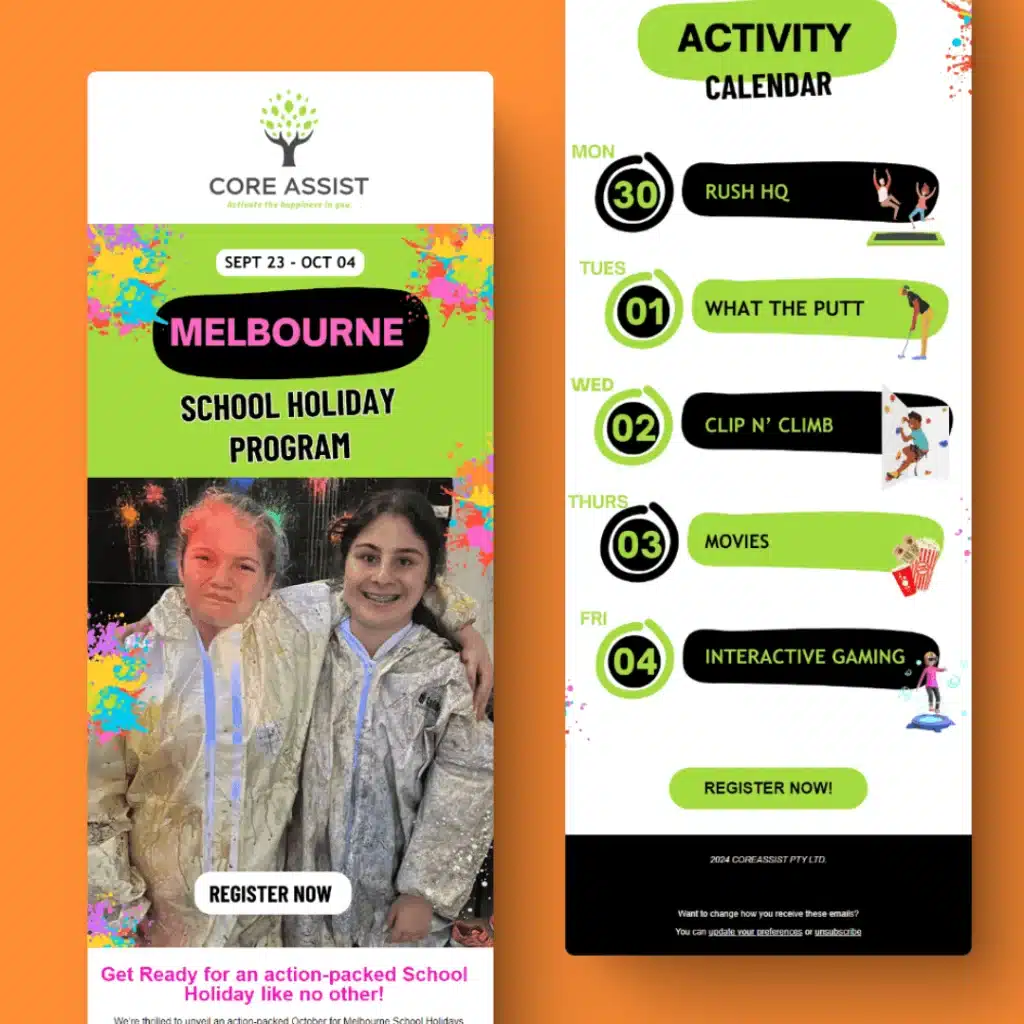
Why Every Small Business Needs an Email Marketing List
Email might feel old-fashioned next to social media, but for small businesses it remains one of the most valuable assets you can…

A strong online presence is what lets the right customers find you, trust you and choose you, often before they ever pick up the phone. For an Australian small business, building that presence does not require a huge budget or constant activity on every platform. It requires getting a few foundations right and being consistent. Here is a practical, step-by-step way to build an online presence that actually brings in enquiries.
Everything else points back to your website, so it has to do its job. That means loading quickly, working beautifully on a phone, and making it obvious within seconds what you offer and how to get in touch. Think of your site as the hub of your online presence: social posts, search results and ads all send people there, and a clear, fast, trustworthy site turns that attention into enquiries. Invest here first, because weaknesses in your website undermine every other channel.
Most small businesses serve a specific area, and local search is where ready-to-act customers look. Claim and complete your Google Business Profile, keep your details accurate, and make sure your website clearly states the services you offer and the areas you serve. Genuine reviews and consistent business information across the web strengthen your visibility. Local SEO is one of the highest-return activities available to a small business, because it reaches people at the exact moment they are searching for what you do.
You do not need to be everywhere. It is far better to be genuinely active on one or two platforms where your customers actually spend time than to spread yourself thin across all of them. Choose the channels that fit your business and audience, then post consistently and helpfully rather than constantly. A focused, reliable presence on the right platforms builds familiarity and trust without consuming all your time.
People buy from businesses they trust, and trust is built through proof and usefulness. Encourage happy customers to leave honest reviews, and respond to them thoughtfully. Share content that genuinely helps your audience, whether that is answering common questions, explaining your process or offering practical tips. Helpful content positions you as a knowledgeable, reliable choice and gives search engines more reasons to show your site to the right people.
An online presence is built through steady, repeated effort rather than occasional bursts. Keep your business details identical everywhere, refresh your content from time to time, and make sure nothing important is out of date. Consistency signals reliability to both customers and search engines. A presence that is kept current quietly compounds in value, while one that is set up and abandoned slowly fades from view.
The advantage of being online is that you can see what is working. Watch where your enquiries come from, which pages hold attention and which channels deliver results. Put more effort into what is clearly working and quietly drop what is not. You do not need complex analytics; a simple habit of reviewing the basics each month is enough to steer your effort toward the activities that genuinely grow your business.
One of the most common mistakes small businesses make online is trying to be everywhere at once. It feels productive, but it usually results in a string of half-maintained profiles that signal neglect rather than strength. A far better approach is to concentrate your energy where your customers actually are and where you can show up consistently. A single channel managed well, with timely responses and genuinely useful posts, builds more trust than five channels updated sporadically. Presence is about quality and reliability, not sheer quantity, and focusing your effort protects both your time and your reputation.
Beyond overextending, a few recurring mistakes quietly undermine businesses online. Inconsistent details, such as a phone number or address that differs between your website, Google profile and directories, confuse both customers and search engines. Ignoring reviews, whether by never asking or never responding, wastes one of your strongest trust signals. Treating your website as a brochure that is built once and forgotten lets it slowly fall behind. And measuring nothing means you never learn what is working. Avoiding these pitfalls is often easier than the work of building presence in the first place.
An online presence only matters if it produces business. The bridge between visibility and enquiries is a clear path to action on every channel. Make sure each touchpoint, whether a search result, a social post or a review, leads naturally back to a website that makes contacting you effortless. Remove friction wherever you can: obvious buttons, short forms, a visible phone number and reassuring proof that you are reliable. When your presence consistently guides interested people toward a simple next step, visibility stops being a vanity metric and starts becoming a steady source of customers.
If you have little online presence today, the worst thing you can do is try to do everything at once and burn out within a fortnight. Start with the one foundation that matters most: a clear, fast, mobile-friendly website that explains what you do and makes contact easy. Once that is solid, claim your Google Business Profile and ask a few happy customers for reviews. Only then add a single social channel that suits your audience. Building in this order means each step reinforces the last, and you create momentum you can actually sustain rather than a flurry of activity that quietly fizzles out.
Keep reading
Other pieces on the same sort of problem, written out of the work we do for Australian businesses.

Send us your website and we will come back with the specific things we would change and why, in plain English. No pitch deck, no obligation, and you keep the notes either way.
Rated 5.0 from 100+ Google reviews. No lock in contracts, ever.