
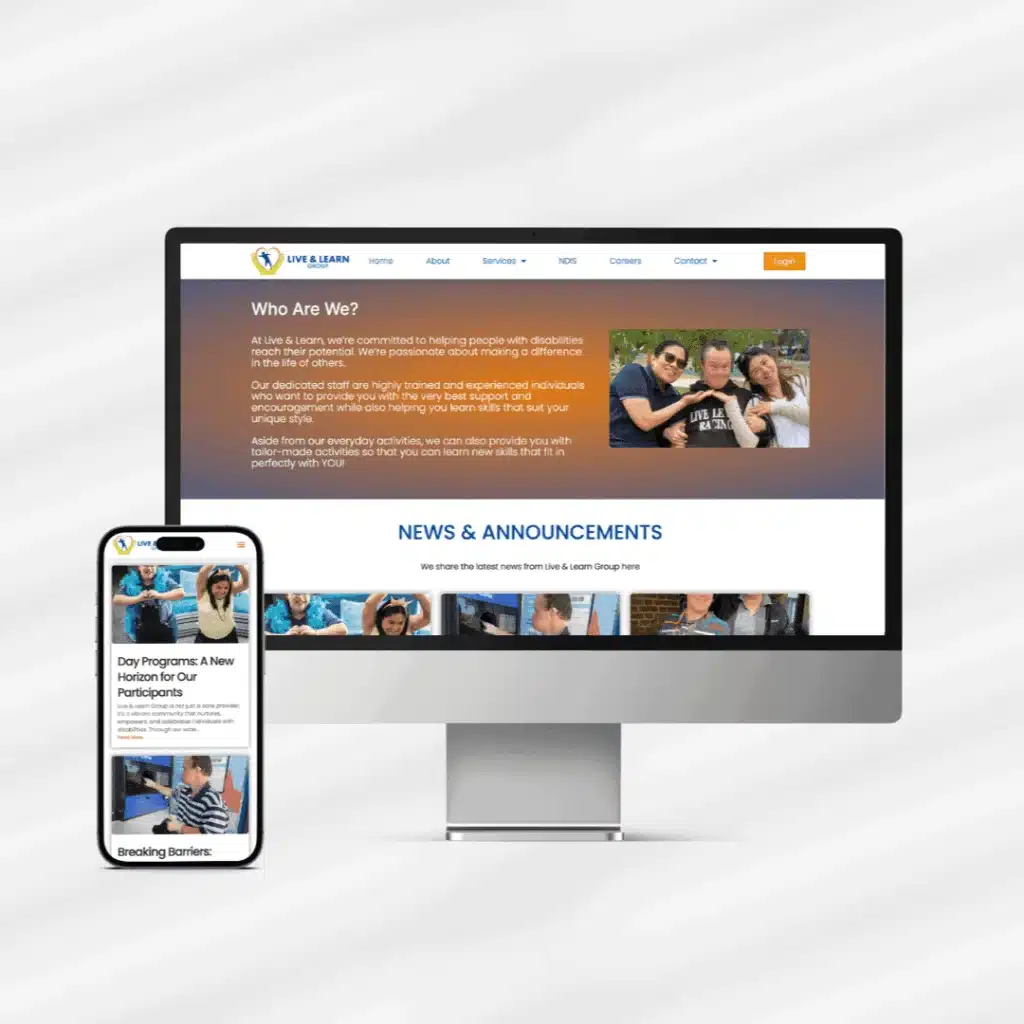
10 Web Design Tips for NDIS Providers
A great NDIS website is not about flashy design, it is about clarity, accessibility and trust. These practical web design tips for…

For NDIS providers, being found online is increasingly how new participants and referrals arrive. When someone needs a support, they search, and the providers who appear are the ones who get the enquiry. Search engine optimisation, or SEO, is how you earn that visibility. It is not about tricks; it is about making your website genuinely findable, relevant and trustworthy. Here is a practical guide to SEO for NDIS providers, focused on the steps that actually move the needle.
Participants, families and support coordinators routinely search online to find and compare providers. If your website does not appear when they search for the supports you offer in your area, you are simply not in the running. SEO puts your service in front of these people at the exact moment they are looking, which is far more effective than hoping to be found by chance. For NDIS providers, strong search visibility is one of the most reliable sources of qualified enquiries.
Understanding how your audience searches shapes everything. People look for specific supports combined with their location, for provider types, and for answers to questions about the scheme. Coordinators often search on behalf of participants, looking for providers who clearly explain their services and availability. Knowing the real language and intent behind these searches lets you create content and pages that match what people are actually typing, which is the foundation of effective SEO.
SEO begins with a solid website. For NDIS providers, that means an NDIS website designed to be fast, mobile-friendly and genuinely accessible to people with disability, because accessibility is both essential and good for search. Search engines favour sites that load quickly and work well for everyone. A slow or inaccessible site undermines your rankings and excludes the very people you serve, so these foundations must come first before any other SEO effort can pay off.
Effective SEO means targeting the terms your audience actually searches. Identify the supports you offer and the way people describe them, including location-based phrases for the areas you serve. Use these naturally in your page titles, headings and content rather than stuffing them in. Targeting realistic, relevant keywords, including the specific supports and service areas you cover, helps you rank for searches that bring genuinely interested participants and coordinators to your site.
Your service pages do much of the SEO heavy lifting. Each key support should have a clear, well-structured page that explains what you offer, who it helps and how to get started, written in plain language and mapped to the relevant NDIS categories. Well-optimised service pages rank better and convert better, because they answer exactly what searchers want to know. Treating each service as its own focused page is far more effective than burying everything on one.
Most NDIS support is delivered locally, so local SEO is crucial. Make the suburbs and regions you serve clear throughout your site, and ensure your business details are consistent everywhere online. This helps you appear when nearby participants and coordinators search for support in their area. Local visibility captures people with immediate, location-specific intent, making it one of the highest-value areas of SEO for any provider delivering supports in particular communities.
A complete, accurate Google Business Profile strengthens your local search presence and puts key information in front of searchers immediately. Claim it, fill in every detail, choose accurate categories and keep it current. For providers, this listing can drive direct enquiries and reinforce the local relevance of your website. It is a free, high-impact tool that complements your on-site SEO and helps you appear prominently when people search for providers nearby.
Trust matters enormously in the NDIS sector, and it also influences SEO. Genuine reviews, clear information about your team and values, and consistent details across the web all build the credibility that search engines and people reward. Encourage satisfied participants and coordinators to leave honest reviews, and respond thoughtfully. These trust signals improve both your rankings and the likelihood that someone who finds you decides to make contact.
Content that answers the questions your audience asks attracts searchers and builds authority. Plain-language articles explaining supports, the planning process or common concerns can capture people researching their options and guide them toward your service. This content also signals relevance and expertise to search engines. For NDIS providers, helpful, accessible content is a powerful way to be found earlier in someone’s journey and to demonstrate the understanding that builds trust.
SEO is an ongoing process, not a one-off task. Use search and analytics data to see which terms bring you visitors, which pages perform, and where enquiries come from. This evidence lets you focus your effort on what works and improve what does not. Regularly reviewing your performance and refining your content and pages keeps your SEO progressing, steadily building the visibility that brings a reliable flow of enquiries over time.
Common mistakes include neglecting accessibility, burying services in vague language, ignoring local signals, and treating SEO as a one-time setup. Some chase irrelevant high-volume terms instead of the specific supports and areas they serve, while others publish thin content that offers little value. Avoiding these pitfalls, by building an accessible site, targeting realistic keywords, optimising service pages and creating genuinely helpful content, gives NDIS providers a durable, ethical path to being found.
Keep reading
Other pieces on the same sort of problem, written out of the work we do for Australian businesses.
Send us your website and we will come back with the specific things we would change and why, in plain English. No pitch deck, no obligation, and you keep the notes either way.
Rated 5.0 from 100+ Google reviews. No lock in contracts, ever.